Fabric sourcing and testing
Denim rolls and knitted t-shirt fabric are checked for GSM, shrinkage, skewness, shade, and defects before release. This avoids cutting losses and reduces fit claims after washing.
The manufacturing line combines material planning, precision cutting, operation breakdown, sewing control, wet or dry finishing, and final inspection. Each stage affects fit, durability, and customer acceptance.
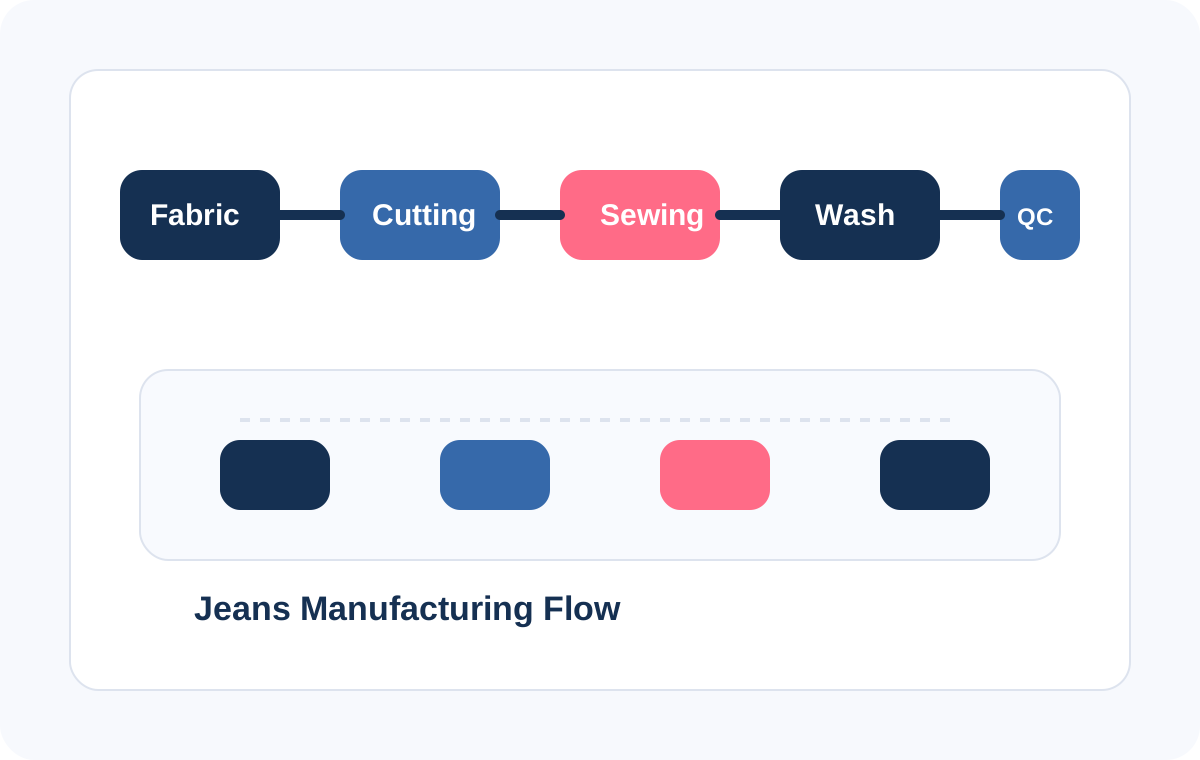
These are the practical stages commonly followed to manufacture jeans and knitted t-shirts at factory level.
Denim rolls and knitted t-shirt fabric are checked for GSM, shrinkage, skewness, shade, and defects before release. This avoids cutting losses and reduces fit claims after washing.
Base patterns are developed for each fit such as slim jeans, straight jeans, crew neck t-shirts, or oversized styles. Sizes are graded carefully so production maintains chest, waist, hip, inseam, and body length consistency.
The cutting team lays fabric in spreads and follows marker plans to improve utilization. For denim, panel direction and shade grouping matter; for t-shirts, curling and lay tension must be controlled.
Cut panels are bundled by size, color, and order reference. Proper numbering prevents mixed parts, which is critical when jeans fronts, backs, pockets, waistbands, and yokes move through different operators.
Operators assemble garments in sequence using lockstitch, overlock, flatlock, coverstitch, and bartack operations. Good line balancing improves output without forcing quality compromises or excessive rework.
Jeans may go through enzyme wash, stone wash, softening, whiskering, or garment over-dyeing, while t-shirts usually go through compaction, soft finish, and thread trimming. These finishes directly influence hand feel and retail appearance.
Each garment is checked for seam quality, puckering, print alignment, stains, broken stitches, open seams, and critical measurements. Inspection before packing protects the shipment from avoidable returns.
Approved pieces are folded, tagged, barcoded, poly packed, and carton sorted by size ratio. Clean documentation and carton control help buyers receive the correct order mix without shortages or incorrect labeling.
Jeans and t-shirts follow different process priorities even when produced under the same factory roof.
| Area | Jeans production | T-shirt production |
|---|---|---|
| Main fabric | Denim twill with stretch or rigid construction | Single jersey, interlock, pique, or cotton-blend knit |
| Key operations | Fly make, waistband join, pocket attach, rivet and bartack | Neck rib attach, shoulder tape, sleeve set, bottom hem |
| Critical finish | Wash recipe, abrasion effect, trim strength | Print hand feel, curing, dimensional stability |
| Inspection focus | Seam strength, shade match, whisker symmetry | Chest/body length, print placement, needle damage |